Shackle Body and Pin Types: What Is the Difference?
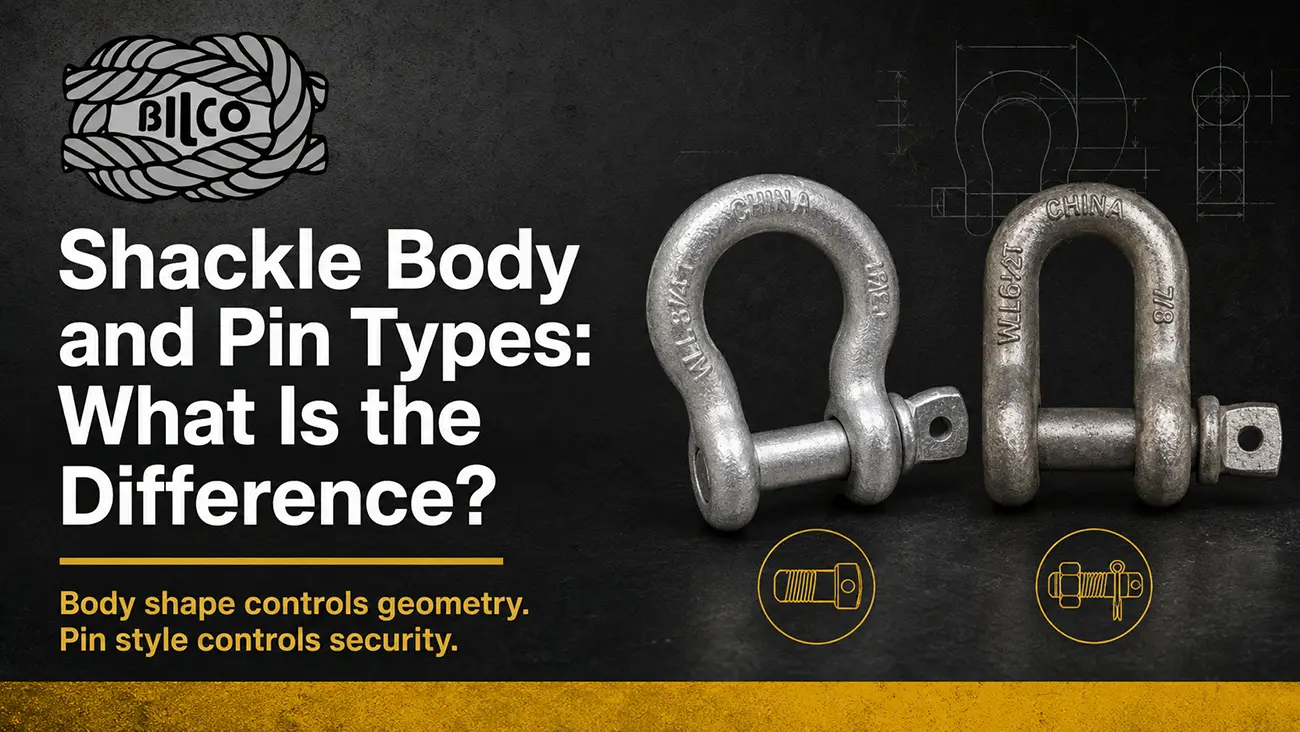
Two shackles can share the same nominal size and Working Load Limit without being interchangeable. One body shape may fit the connection correctly, while another may crowd the attached components or alter how the load enters the hardware. The pin introduces a separate decision because temporary assembly and long-term retention place different demands on the closure. Shackle specifications therefore address two separate questions: Which body geometry is specified for the load path, and which pin style is specified for retaining the connection?
The marked WLL and product specifications then confirm whether the individual shackle meets the application requirements.
Body Shape Controls Connection Geometry
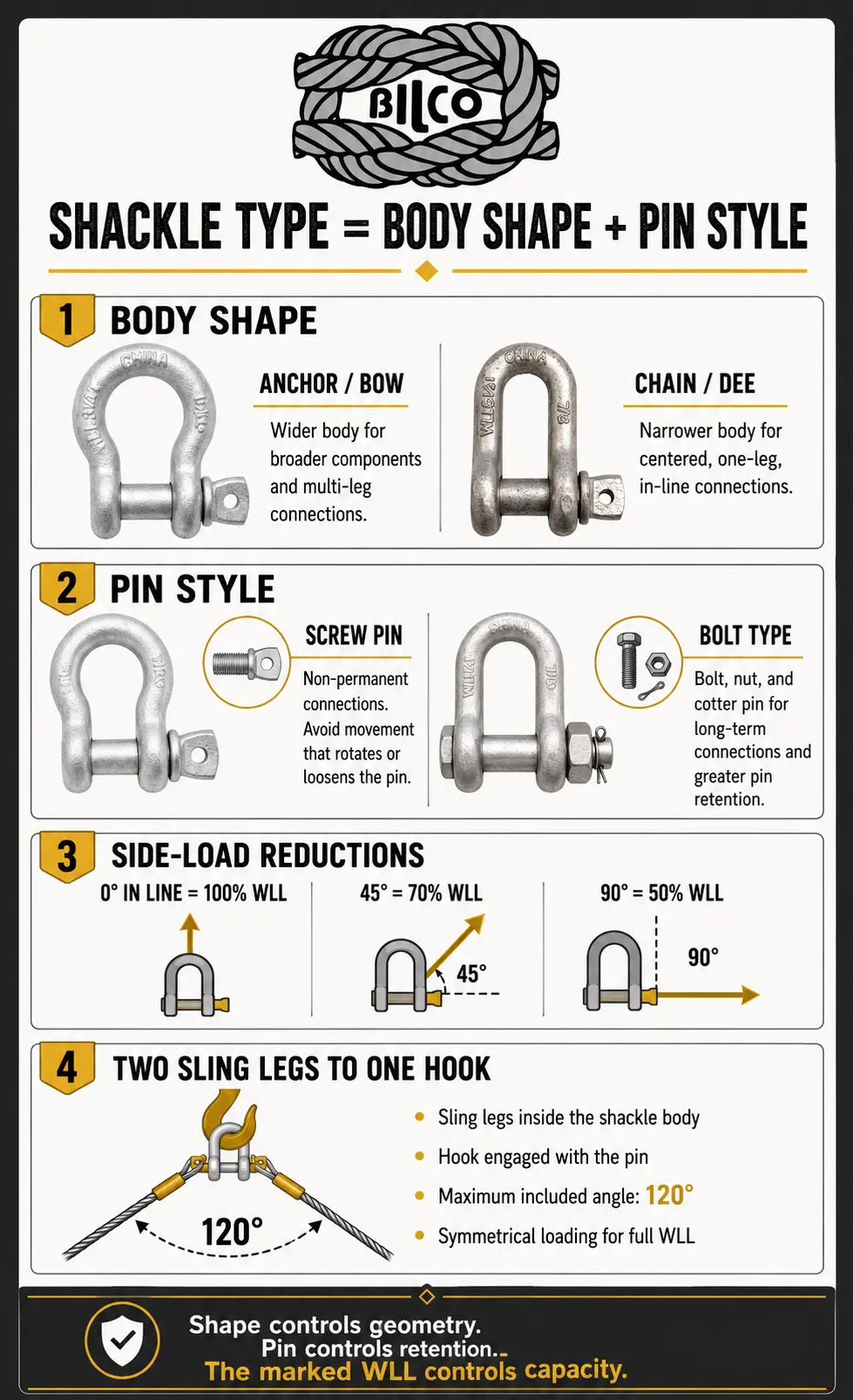
Body shape affects the space available for connected components and how those components remain aligned after the load enters the system. Anchor and chain shackles serve different connection arrangements, but neither shape automatically provides greater capacity or permits unrestricted angular loading. The correct distinction rests on connection geometry: anchor shackles provide a wider bow for broader or multi-leg arrangements, while chain shackles provide a narrower body for centered, in-line loads. The loading direction and the marked WLL still control how each shape is used.
Anchor or Bow Shackles Provide More Internal Space
Anchor shackles, also called bow shackles, have a wider, rounded body. The added internal width accommodates broader components and connections involving multiple sling legs. Green Pin® documentation identifies anchor or bow shackles as the primary body style for multi-leg systems. The wider body gives the connected components room to sit within the bow without crowding the shackle eyes.
Chain or Dee Shackles Support In-Line Connections
Chain shackles, also called dee or D shackles, have a narrower body. Green Pin® documentation identifies this shape primarily with one-leg systems. According to Green Pin® documentation, the narrower profile is designed for connections where the load remains centered and follows a straight path through the shackle. The difference concerns connection geometry, not an assumption about strength.
Body Shape Does Not Determine Capacity
Bilco’s imported 1-inch screw pin anchor shackle and 1-inch screw pin chain shackle both carry an 8½-ton WLL. The matching ratings show why body shape should not be treated as a capacity ranking. The anchor shackle provides more room within the body, while the chain shackle supports a narrower, in-line connection.
A Wider Bow Does Not Remove Side-Loading Restrictions
Green Pin® documentation defines in-line loading as a load perpendicular to the pin and within the plane of the bow. Side-loading angles represent the amount of deviation from this in-line position. For the products covered by the document, the reductions are:
- 0-degree in-line load: 100 percent of the original WLL
- 45-degree side load: 70 percent of the original WLL
- 90-degree side load: 50 percent of the original WLL
These reductions show why the additional clearance inside an anchor shackle should not be mistaken for unrestricted multidirectional loading. The body must remain oriented in accordance with the manufacturer’s loading instructions.
Connecting Two Sling Legs to a Lifting Hook
Green Pin® documentation also provides a specific arrangement for connecting two sling legs to the hook of a lifting device:
- Place both sling legs inside the shackle body.
- Engage the lifting hook with the shackle pin.
- Keep the angle between the sling legs at or below 120 degrees.
- Maintain symmetrical loading to use the shackle at its full WLL.
As the angle between the sling legs increases, the load carried by each leg also increases. The resulting force must be considered when confirming the capacity of every shackle attached to the sling assembly.
Learn more about how shackle body shape affects sling alignment in Choosing Between Bow Shackles and Dee Shackles for Wire Rope Slings.
Pin Type Controls Connection Security
A screw pin threads directly into the shackle eye. Green Pin® documentation associates screw pin shackles primarily with non-permanent applications. Manufacturer instructions describe this design for connections assembled and removed during regular rigging work, provided movement does not rotate or loosen the pin.
Correct seating matters because the pin must engage the full depth of the threaded eye. The Green Pin® instructions call for tightening the pin by hand, then using a suitable tool to ensure the collar seats fully against the shackle eye. A bent pin, damaged thread, or misaligned pin hole prevents proper seating and removes the shackle from consideration.
A bolt-type shackle uses a bolt, nut, and retaining cotter pin. Green Pin® documentation associates this closure with long-term or permanent applications. Green Pin® notes that a bolt-type closure provides additional pin retention when movement against the pin creates a risk of rotation. The retaining components provide greater pin security but do not change the shackle body’s permitted loading direction.
Bolt type does not automatically mean greater capacity. Bilco’s imported 1-inch screw pin anchor shackle and 1-inch bolt-type anchor shackle both carry an 8½-ton WLL. The bolt-type version provides a different retention method, not an automatic increase in WLL.
Pin security also depends on the use of matching components. The shackle body and pin must match in size, type, and make. A pin taken from another shackle should not be substituted based only on physical fit. Bolt-type shackles must also retain the correct nut and cotter pin whenever they enter service.
Learn more about pin engagement, positioning, loading, and inspection in Below the Hook: Shackle Do’s and Don’ts.
Shackle Type Does Not Establish Capacity
Terms such as anchor, chain, screw pin, and bolt type describe construction features. They do not establish the WLL of a specific shackle. Nominal size alone is also insufficient, as ratings, dimensions, materials, and design factors differ across product lines.
The federal-specification references in Bilco’s imported shackle documents reinforce the distinction between shape and closure:
- Screw pin anchor shackles: Type IV A, Class 2
- Screw pin chain shackles: Type IV B, Class 2
- Bolt-type anchor shackles: Type IV A, Class 3
- Bolt-type chain shackles: Type IV B, Class 3
The A and B designations separate anchor and chain body styles. Class 2 and Class 3 separate screw pin and bolt-type closures. These classifications describe product construction and performance requirements. The marked rating of the individual shackle still controls capacity.
Bilco’s product documentation also shows why ratings should not be transferred between domestic and imported shackles of the same nominal size. The imported specification sheet gives a 1-inch anchor shackle an 8½-ton WLL. The domestic Midland Super Strong sheet gives its 1-inch anchor shackle a 10-ton WLL. Both are 1-inch anchor shackles, but their ratings are not interchangeable.
Permanent markings connect the physical shackle with its specifications. Bilco’s domestic Midland sheet identifies WLL and traceability codes as permanent markings on the body and pin. Green Pin® documentation also identifies WLL, manufacturer identification, traceability, and steel grade among the required markings for lifting shackles.
Shackle Vendors and Product Lines Available from Bilco
Bilco supplies shackles from named manufacturers along with galvanized import lines. The available product families include models documented for standard rigging connections, domestic sourcing requirements, heavy lifting, low-temperature service, and specialized offshore applications.
Green Pin® is manufactured by Van Beest. The catalog available through Bilco includes Green Pin® Standard, Polar, Super, Sling, Heavy Duty, Heavy Duty Polar, and specialized ROV shackles. Depending on the model, the range includes bow and dee bodies with screw collar or safety-bolt closures. Review the Green Pin® shackle catalog.
Midland Super Strong covers Bilco’s documented domestic anchor-shackle line. The specification sheet lists screw pin and bolt-and-nut configurations made with microalloy bodies and quenched-and-tempered alloy pins. The document specifies a 6:1 design factor, permanent WLL, and traceability markings, with optional magnetic-particle, proof-load, and fatigue testing requested when ordering. Review the Midland Super Strong shackle specifications.
Bilco’s galvanized import lines include screw pin anchor, screw pin chain, bolt-type anchor, and bolt-type chain shackles. The related specification sheets provide listed WLLs, dimensions, weights, material descriptions, and applicable RR-C-271 performance requirements. View Bilco’s rigging hardware selection.
The manufacturer or product line adds another layer to the designation, but the designation structure stays consistent. Body shape addresses connection geometry. Pin style addresses retention. The marked WLL and the matching technical documentation confirm whether the individual shackle meets the connection requirements.
Body and Pin Designations Describe Separate Features
A complete shackle designation answers two separate questions. The body shape addresses how the load enters and moves through the connection. The pin style addresses how the connection stays secured during service.
The purchaser must confirm the individual WLL, dimensions, material, markings, and required documentation. A familiar body style, larger nominal size, or more secure pin does not replace those specifications. Each factor must match the actual connection and loading conditions.
The purchaser is responsible for establishing suitability before the equipment enters service. Inspection and maintenance determine whether the shackle stays fit for continued use. Learn more about ongoing care in Tips for Maximizing the Lifespan of Rigging Supplies: Shackles and Clips.
Bilco Group supplies anchor and chain shackles with screw pin and bolt-type closures across multiple Working Load Limits and product lines. Contact Bilco Group to request product specifications, documentation, and availability. The purchaser remains responsible for selecting equipment for the application.