
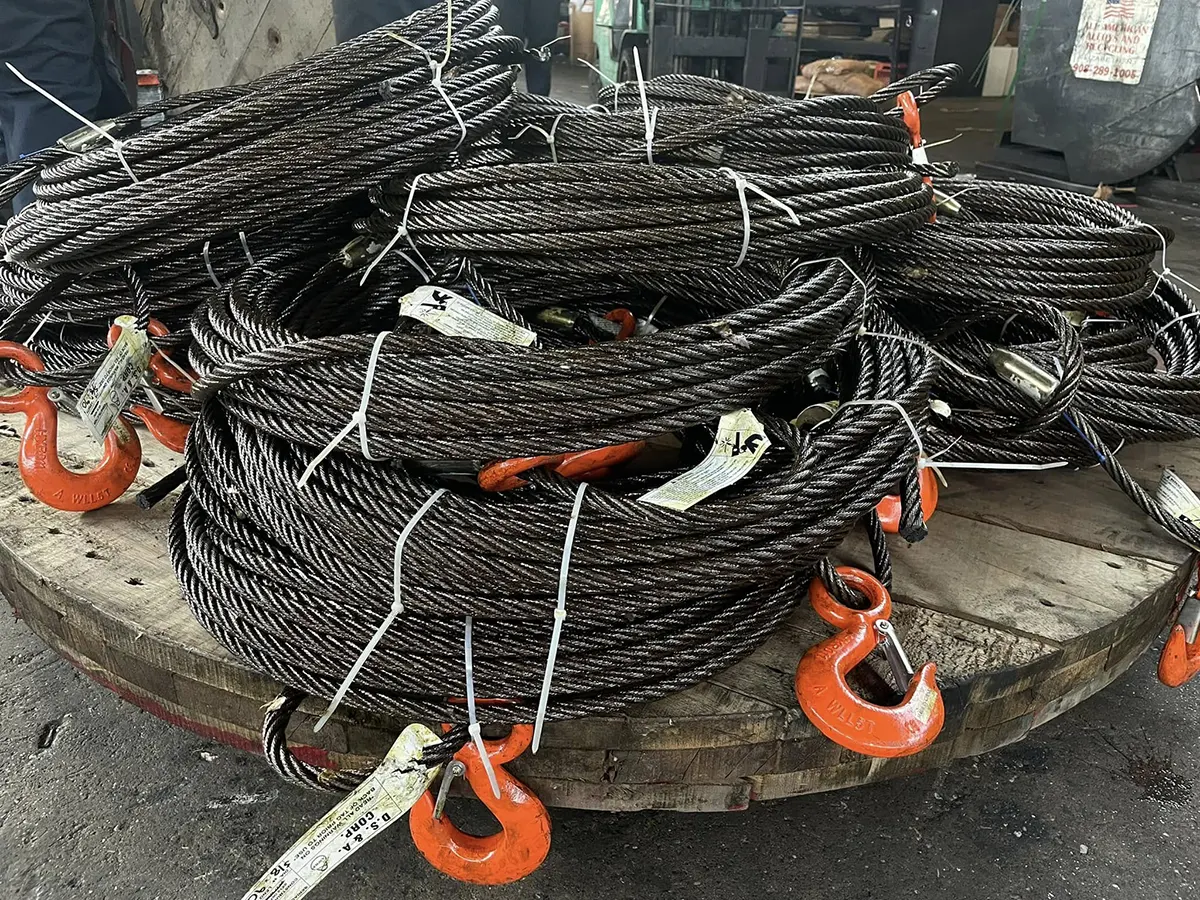
Wire rope slings operate quietly in the background of most lifting operations, until they do not. Failures rarely come from a single dramatic overload. They develop through small, compounding issues that go unnoticed, undocumented, or misunderstood over time. Missed inspections, unclear responsibility, and hidden damage are far more common contributors than most teams realize.
A reliable wire rope sling inspection program is not built solely on checklists. It depends on understanding how slings actually age in service, how the environment and handling accelerate wear, and how inspection data should inform real decisions. Organizations that manage this well treat inspection as an operational system, not a compliance task.
Why Wire Rope Sling Inspection Programs Break Down
Wire rope slings are among the most heavily abused rigging components on any site. They are dragged across floors, choked improperly, stored wet, or forced into sharp radii that accelerate internal damage. Many of these issues do not appear immediately, creating a false sense of security.
Another common failure point is responsibility. In many operations, inspection duties are assumed rather than assigned. Daily checks happen inconsistently, periodic inspections slip, and records are incomplete or missing. Over time, it becomes difficult to know which slings are still within their intended service life and which have quietly crossed a safety threshold.
From years of working alongside rigging and maintenance teams, Bilco Group has seen that inspection programs struggle most when they rely on generic guidance without adapting it to actual operating conditions. Slings used indoors on controlled lifts behave very differently from those exposed to moisture, grit, chemicals, or constant reconfiguration. Treating them the same leads to blind spots.
Who Should Inspect Wire Rope Slings, and When
Defining Inspection Roles: A functional inspection program clearly separates responsibility.
- A competent personperforms frequent visual inspections. This individual is designated by the employer and understands the basic failure indicators of wire rope slings. These inspections occur before use, at shift changes, or whenever lift conditions change.
- A qualified personperforms periodic inspections. This role requires deeper knowledge of wire rope construction, wear mechanisms, and removal criteria. Periodic inspections are not quick walk-bys. They are structured examinations intended to evaluate remaining service life.
Operations that blur these roles often miss early warning signs. Clear assignment reduces that risk.
Establishing Inspection Frequency
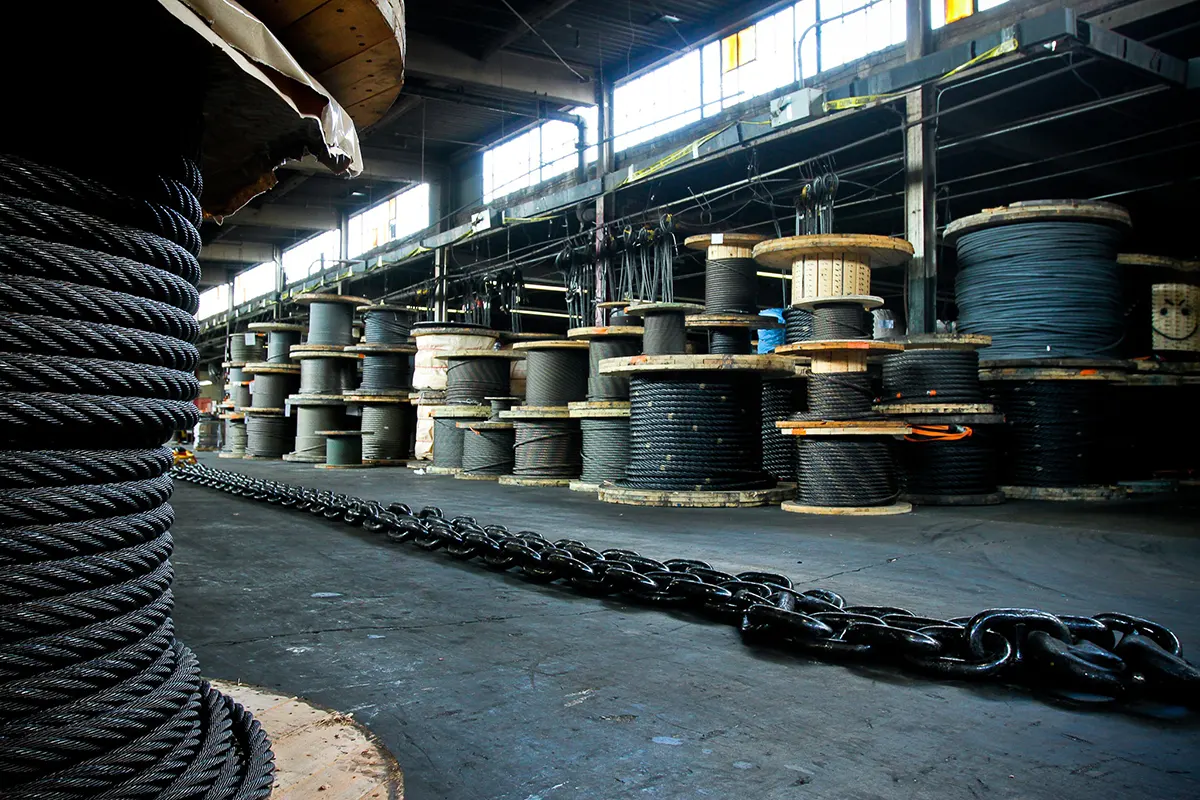
Wire rope slings do not fail on a calendar. They fail based on how often they are used, how they are handled, and what they are exposed to. An inspection schedule that ignores service severity creates blind spots that visual checks cannot catch. Effective programs set inspection frequency based on real operating conditions, not convenience or habit.
Wire Rope Inspection Types and Required Timing
- Initial inspection:Every sling should be inspected upon receipt. Tag information, rated capacity, construction, and end fittings must match the order. Shipping damage, while uncommon, does occur.
- Frequent inspections:Visual inspections should occur before each use or shift. These inspections focus on obvious defects such as broken wires, kinks, crushing, bird-caging, corrosion, and damaged fittings.
- Periodic inspections:Periodic inspections are scheduled based on service conditions. Normal service may justify monthly visual reviews with semi-annual detailed inspections. Severe service, including high cycles, abrasive environments, moisture exposure, or complex rigging, may require weekly or daily visual checks and quarterly detailed inspections.
Organizations that adjust inspection frequency based on real use patterns tend to catch problems earlier and retire slings more predictably.
A Practical Wire Rope Sling Inspection Process
| Condition | Removal trigger |
| Missing or illegible tag | Remove immediately |
| Broken wires | For strand laid slings: 10 broken wires in one lay or 5 broken wires in one strand for cable laid and six part braided slings: 20 broken wires per lay; for eight part braided slings: 40 broken wires per braid |
| Metal loss from wear | Scraping or abrasion removing one third of the original wire diameter. |
| Distortion | Kinking, crushing, bird caging or other deformation that pushes wires out of position |
| Heat damage | Metallic discoloration or fused wires |
| Damaged fittings | Cracked, bent or broken end attachments; hooks opened more than 5% |
| Severe corrosion | Pitting or binding of wires and fittings, affecting strength |
| Pulled eye splices | Moved tucks or pressed sleeves show damage |
| Other conditions | Any damage causing doubt about continued safe use |
Inspection frequency only works when the inspections themselves are done correctly. Even well-timed programs fail when checks are rushed, inconsistent, or focused on the wrong indicators. A reliable inspection process follows a deliberate sequence that moves from basic verification to deeper condition assessment, ensuring no critical signals are missed before a sling is cleared for continued use.
Download the Wire Rope Sling Inspection Checklist
Making Inspection Hold Up Over Time
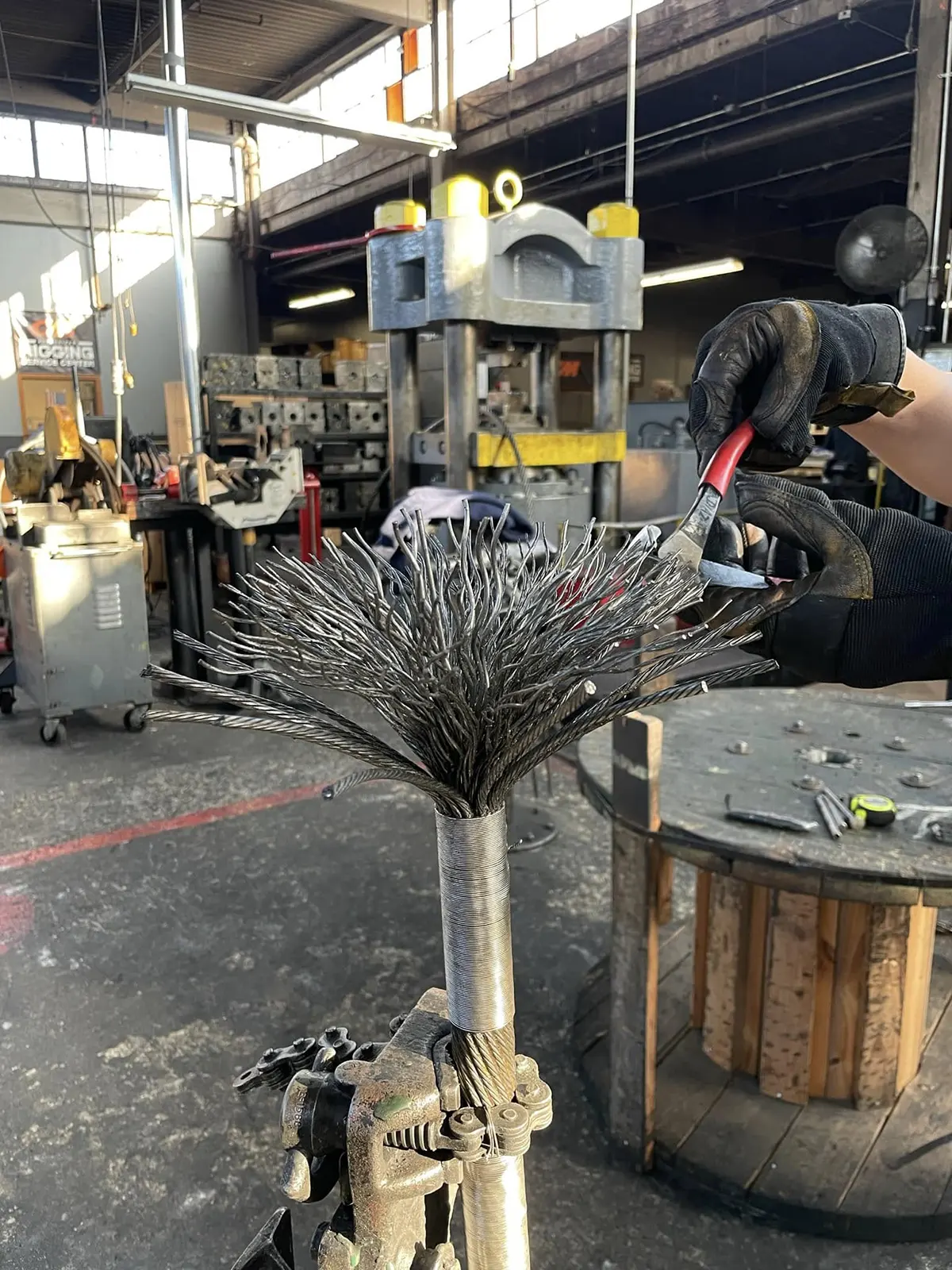
A wire rope sling inspection program is only as strong as its ability to stay consistent under pressure. The gap between a good program on paper and a reliable program in practice is structure. When expectations, responsibility, and follow-through are clearly defined, inspection stops being reactive and starts working as intended.
A durable inspection system reinforces performance through a few non-negotiable practices:
- Match inspection frequency to actual service conditions,not minimum requirements or habit. Slings exposed to higher cycle counts, harsher environments, or complex rigging require tighter oversight.
- Assign inspection responsibility explicitly.Competent and qualified inspectors should be named, trained, and accountable, not assumed.
- Standardize how inspections are performed and recorded.Consistency in process and documentation is what allows trends to surface before failures do.
- Remove slings decisively when criteria are met.Delayed retirement introduces risk without adding value.
- Treat storage and handling as inspection inputs.How a sling is stored, protected, and used directly affects what inspectors will find later.
When inspection is treated as a continuous process rather than a series of isolated checks, it becomes easier to predict sling condition. Decisions become clearer, surprises become rarer, and lifting operations gain a level of control that checklists alone cannot provide.