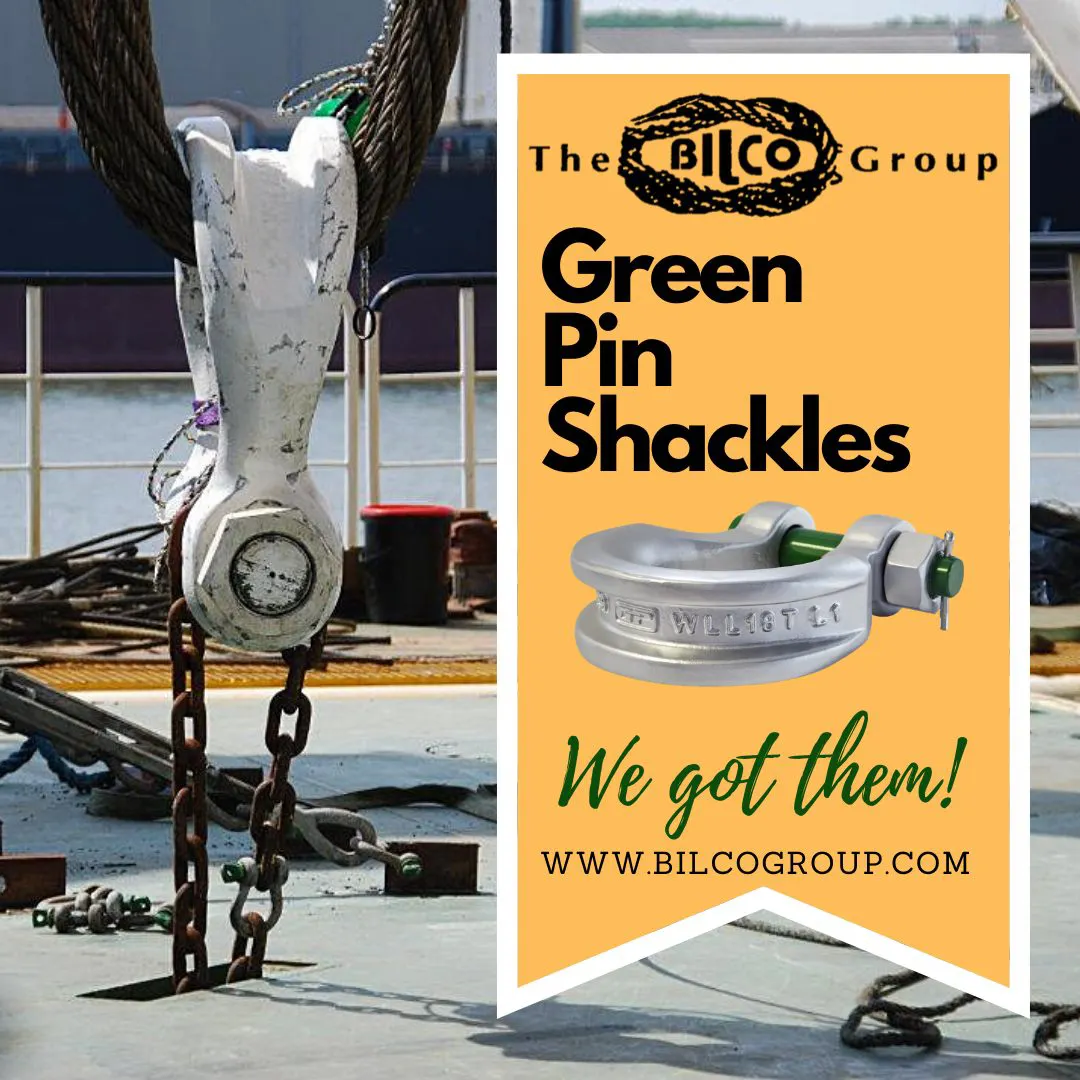
Selecting the correct Green Pin shackle for a wire rope sling assembly often looks simple at first. The hardware fits the connection point, the working load limit appears sufficient, and the rigging seems ready to go. In practice, many rigging problems begin with a much smaller decision than the lift itself. The shape of the shackle body can determine whether a connection stays aligned once the sling takes the load.
Bow shackles and dee shackles are both common in lifting systems, but they are designed to carry force differently. When a wire rope sling or bridle begins to tension, the geometry of the lift changes. Sling legs spread outward, loads redistribute, and the connection hardware begins to experience forces that were not obvious while the rigging was still slack. Choosing the correct Green Pin shackle means anticipating those changes before the lift begins.
Bilco supplies Van Beest Green Pin shackles alongside wire rope slings and other rigging hardware used in lifting systems. Understanding how shackle body shape interacts with sling geometry helps ensure that the hardware supporting the lift is carrying the load the way it was designed to.
Why Bow Shackles Handle Multi-Leg Wire Rope Bridles More Effectively
Bow shackles feature a wider, rounded body that creates more space inside the shackle. That extra space becomes important when multiple sling legs are connected through the same piece of hardware.
In a wire rope bridle, two or more sling legs share the load. As the lift begins, those legs spread outward from the connection point. The wider body of a bow shackle allows the sling eyes to sit inside the curve of the shackle without being forced toward the edges of the hardware. The load can still move through the pin and body in a controlled direction even as the sling legs adjust under tension.
This is why bow shackles are commonly used when connecting:
- Two-leg wire rope bridles to crane hooks
- Sling legs to master links or master link assemblies
- Multi-leg bridle systems that must accommodate shifting load paths
The rounded shape of the bow distributes force more evenly across the shackle body as the sling angles change. Instead of concentrating force at a narrow point, the hardware provides room for the connection to remain aligned.
In other words, the bow shackle allows the rigging system to move slightly while still carrying the load along the intended axis. When a lifting configuration includes multiple sling legs or a bridle assembly, a Green Pin bow shackle usually provides the geometry needed to keep the connection properly aligned.
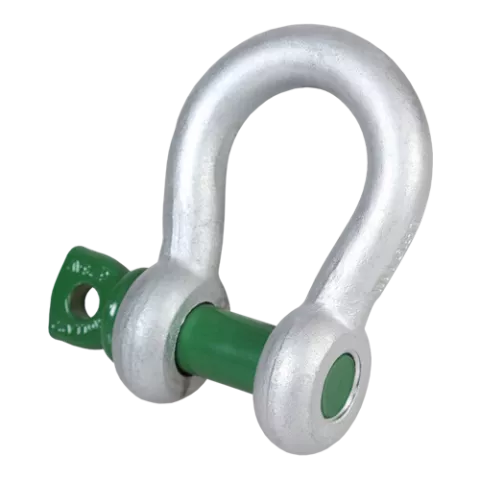
When a Dee Shackle Is the Correct Choice
While bow shackles provide flexibility for multi-leg systems, dee shackles serve a different purpose. The body of a dee shackle is narrower and more elongated, keeping the load closer to the pin's centerline.
This design works best when the load travels through the connection in a straight line. A single-leg wire rope sling typically pulls directly upward from the connection point. In this situation, the narrow shape of the dee shackle helps maintain alignment and prevents the load from shifting within the body of the hardware.
Dee shackles are often appropriate when:
- A single sling leg connects directly to a lifting lug
- The load path remains in line with the pin
- The rigging configuration keeps the hardware from rotating or shifting
Because the body of a dee shackle restricts movement, it helps keep the force centered across the pin when the lift is controlled, and the load direction remains predictable. However, that same narrow shape becomes a limitation if the connection needs room to accommodate multiple sling legs or shifting angles. A Green Pin dee shackle works best when the load remains in a straight line, and the connection geometry keeps the sling aligned with the pin.
What Happens When Wire Rope Sling Legs Spread Under Load
Wire rope sling systems rarely remain perfectly vertical once the lift begins. As the weight transfers into the sling legs, the geometry of the rigging adjusts. The legs move outward, and the angles between them increase. This movement occurs for several reasons. Wire rope stretches slightly under tension, and the sling legs equalize as the load finds its natural balance. Even lifts that begin perfectly symmetrical can shift as the load settles into the rigging.
When sling legs spread outward, the direction of force applied to the connection hardware changes as well. Instead of pulling straight through the pin, the sling legs begin pulling outward from the sides of the connection point. In a properly selected bow shackle, this outward movement still allows the sling legs to remain inside the curve of the body. The hardware accommodates the change in geometry without forcing the load against the sides of the shackle.
In a dee shackle, the same outward movement may push the sling eyes toward the edges of the hardware. The load that originally traveled straight through the pin can begin pressing against the sides of the shackle body instead. Understanding this behavior is critical when choosing between shackle styles. The hardware must support the shape the sling system will take once the load is applied, not just the shape the rigging has while the system is still slack.
Why the Wrong Body Style Can Create Side Loading
Side loading occurs when the force applied to a shackle moves away from the direction the hardware was designed to carry. Most shackles are intended to be loaded in the plane of the body, with the force traveling perpendicular to the pin. When a dee shackle is used in a two-leg bridle, the spreading sling legs may press against the sides of the shackle body. Instead of carrying the load across the pin, the hardware begins to experience force at an angle across its body.
This situation creates several potential problems:
- Uneven force distribution across the shackle
- Increased stress on the body of the hardware
- Reduced efficiency of the connection
- Rigging configurations that must be corrected before lifting
Side loading is not always immediately obvious during rigging. The connection may appear centered while the sling legs are still slack. Once the load is applied and the geometry changes, the direction of force shifts.
Selecting the correct Green Pin shackle body style helps prevent this condition by ensuring the connection remains aligned as the sling system tensions. If sling legs will spread outward or pull from multiple directions, the shackle must allow room for that movement without forcing the load across the body of the hardware.
Hook Connections and Proper Shackle Orientation
One of the most common places where shackle selection matters is the connection between sling assemblies and crane hooks. When two sling legs connect to a hook using a shackle, the orientation of the hardware becomes important. The sling legs should typically sit inside the body of the shackle, while the pin rests in the hook. This arrangement allows the sling legs to move slightly as the lift begins while keeping the load centered across the pin.
A bow shackle is generally better suited for this arrangement because its wider body provides space for both sling legs. The connection can remain balanced as the sling legs adjust under tension. Using a dee shackle in the same situation can cause the sling eyes to crowd together. As the legs spread outward, the hardware may be forced out of alignment, increasing the chance of side loading.
Hook connections illustrate an important principle in selecting rigging hardware. The goal is not simply to connect two components. The goal is to create a connection that continues to function correctly as the load moves through the system.
Choosing the Right Green Pin Shackle for the Lift
Choosing between a bow shackle and a dee shackle ultimately comes down to how the load will travel through the connection once the sling system takes tension. A Green Pin bow shackle is usually the correct choice when multiple sling legs share the load or when the geometry of the lift may change during lifting. The wider body allows the connection to accommodate shifting sling angles while keeping the load aligned with the pin.
A Green Pin dee shackle is more appropriate when the load path remains straight, and the connection is controlled by a single sling leg or a properly aligned lifting point. Understanding this distinction helps prevent one of the most common rigging mistakes. Hardware that looks interchangeable in a catalog can behave very differently once it becomes part of a lifting system.
By considering how sling geometry, connection points, and load movement interact, rigging professionals can select the Green Pin shackle that safely and effectively supports the lift.
Need Help Selecting the Right Green Pin Shackle?
Choosing the correct shackle often depends on more than the load rating alone. The sling configuration, connection points, and lifting geometry all influence which hardware will perform best.
Bilco supplies Van Beest Green Pin shackles along with wire rope slings and rigging hardware used in lifting systems. If you are evaluating a wire rope sling or bridle configuration and need help selecting the correct shackle style, our team can review the setup and recommend appropriate hardware.
To learn more about Green Pin Shackles, view the application document HERE.
Related Reading